

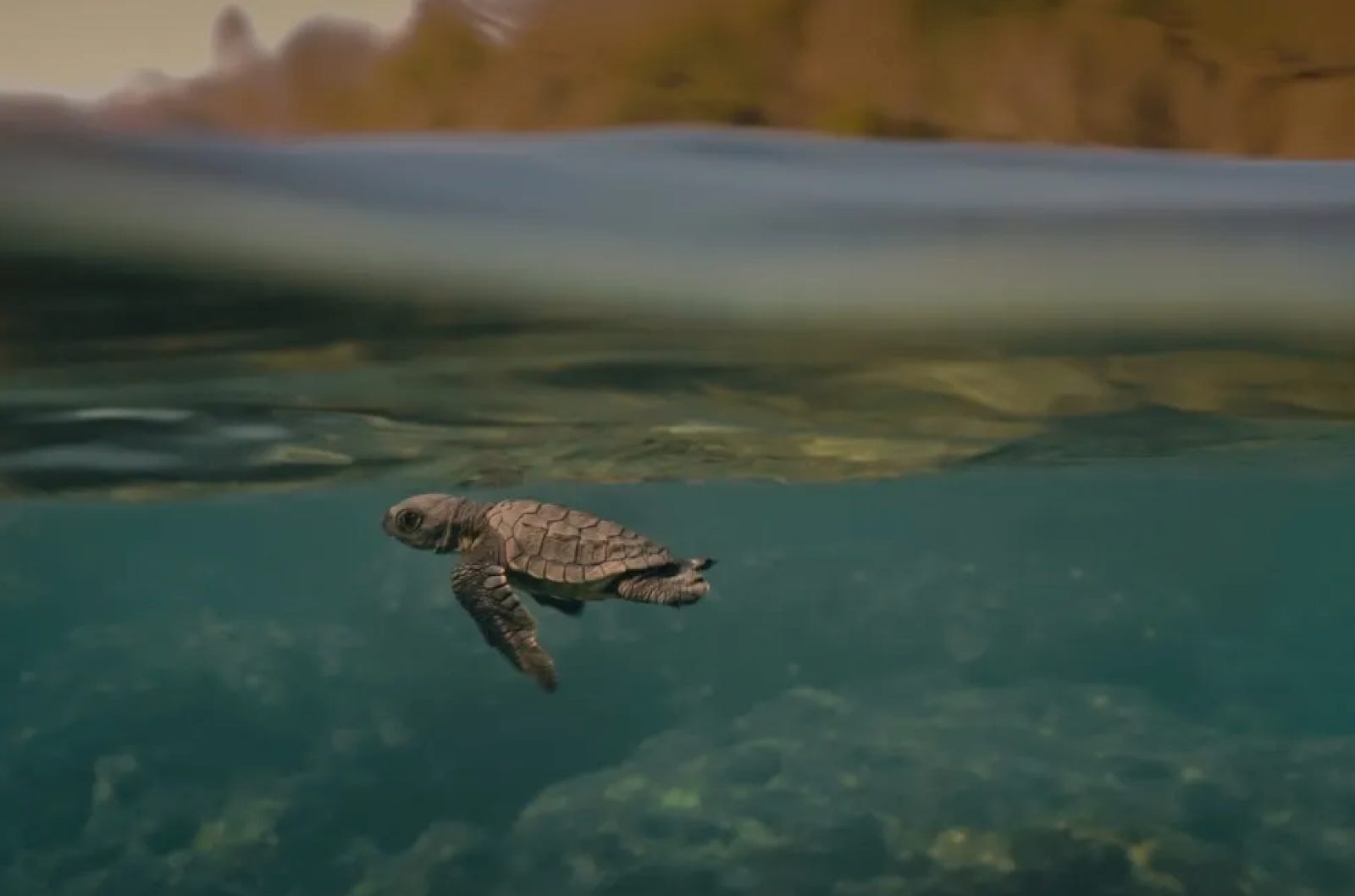
For this year’s NYC Documentary Film Festival, I was delighted to watch the film Turtle Walker helmed by director Taira Malaney and Associate Director/Director of Photography Krish Makhija. The film is about Satish Bhaskar, India’s pioneering turtle conservationist who surveyed nearly 4,000 kilometers of coastline to develop research on sea turtle nesting patterns. Malaney first learned about Bhaskar through a chance encounter with his story while she spent a year learning how to dive in the Andaman and Nicobar Islands, a place Bhaskar had surveyed extensively during his career.
A series of alignments brought Malaney and Bhaskar together in Goa and ardent convincing by Malaney eventually led Bhaskar to agree to being filmed on screen for the doc. Turtle Walker details Bhaskar’s ups and downs while building his research across over 20 years of surveying. Shot stunningly on-site on various locations in the Andaman and Nicobar Islands situated between the Bay of Bengal and the Andaman Sea and Lakshwadeep off the coast of Kerala, the doc demonstrates Bhaskar’s sheer bravery while taking on this mission, sometimes being away in solitude on remote islands for up to five months at a time.
A particularly poignant segment shows Bhaskar succumbing to his loneliness on one of his site visits and writing a letter to his wife Brenda, whom he fondly called “Dodo,” placing it in a glass bottle and wading into a rip current to throw it in the water, somehow hoping that it will get to her through the channels of the ocean. 26 days later, it was found by a fisherman in Sri Lanka and sent to Dodo in India.
As much as this film seems as though it’s a story of an ordinary conservationist and scientist, Turtle Walker is truly a testament to Bhaskar’s passion for the sea turtle. A self-described introvert, Bhaskar recalled spending his childhood days near his mother’s home in Kerala, escaping to the sea which was less than one kilometer away. He was kept company by the presence of wildlife in his early days, a theme that endured throughout his life and an early seed that allowed him to move through the extraordinary journey captured by his documentary.
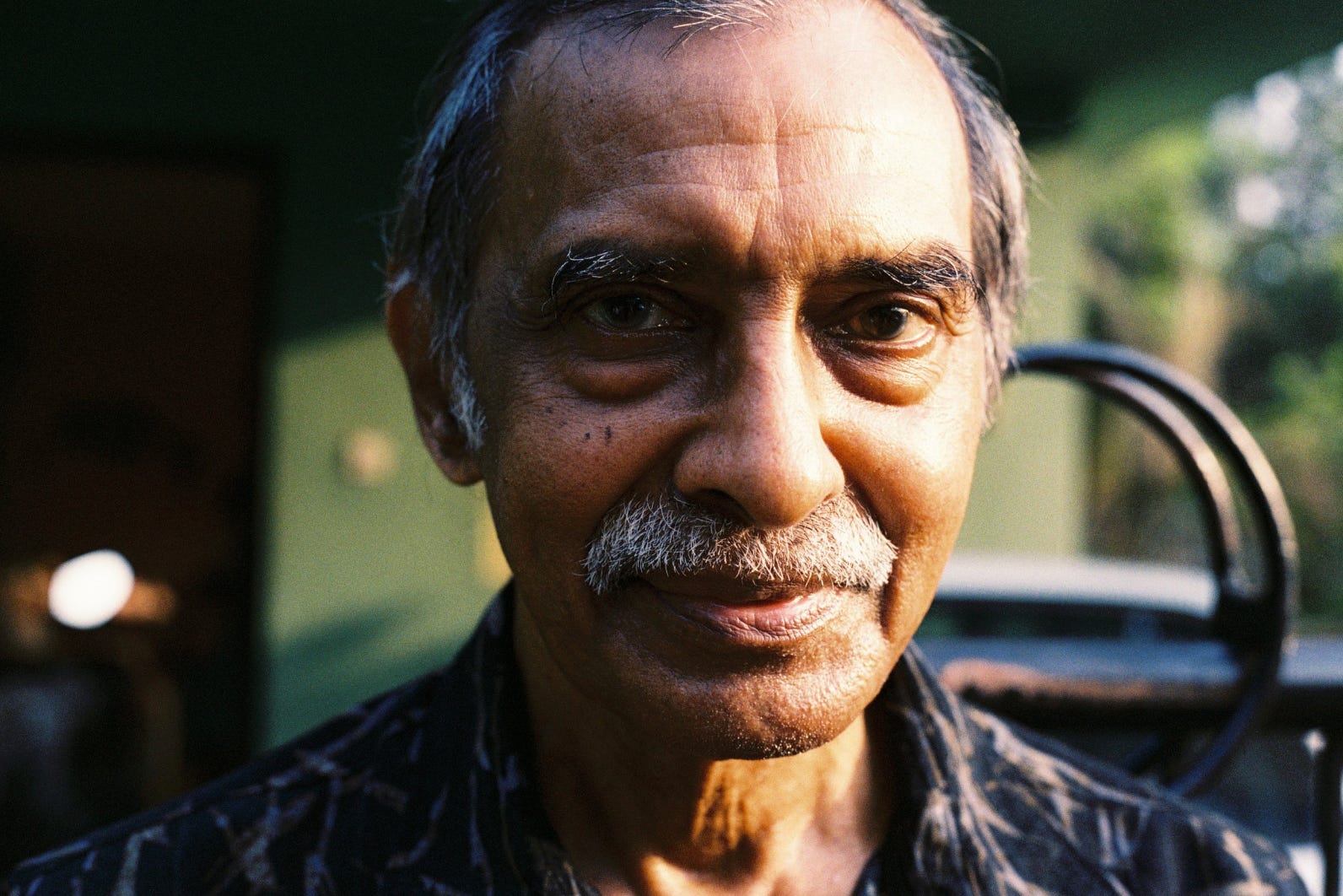
The film’s cinematography is excellent, featuring stunning ocean views and highlighting the incredible flora, fauna and wildlife present amongst the great Indian islands in Andaman and Nicobar. Malaney chose to use a re-enactment of Bhaskar, played by Rohan Jogelekar, to showcase his early journeys throughout the oceanic world which was executed magnificently. The drone-work and the footage of turtle’s nesting was powerful, the sea views were breathtaking and the charm of the film’s subject and his wife made Turtle Walker a treat for the eyes.
A moment I particularly loved was one that featured a crucial ethical dilemma that Bhaskar faced at one of his island destinations. Due to his food ration being spoiled during his voyage, Bhaskar was left without anything to eat, thus leaving him with the painful decision to eat unhatched sea turtle eggs. The regret was evident in Bhaskar’s eyes as he recalled the harrowing tale, noting the event as a “great loss.” I loved the filmmaker’s decision to include this segment because it was an intentional choice to not ignore how challenging Bhaskar’s work truly was. I think the magic of the documentary is that it was able to highlight both Bhaskar and the turtles’ vulnerabilities alike, demonstrating their parallel journey to fight to conserve the future of the species in the subcontinent.
The film is also a wonderful portrayal of the value of community-oriented care which was embodied by all of the subjects featured in the film. Whether it was Bhaskar’s wife’s endless devotion and support for him while he completed his life’s mission or Bhaskar’s friendship with a fisherman who aided him in surveying the Andaman and Nicobar Islands purely out of a desire to help, Bhaskar’s journey of 4,000 kilometers was pushed forth by a larger sense of mission for those who encountered him and his story. The film finishes with a beautiful full-circle, an aged Bhaskar returning back to the Andaman and Nicobar Islands post the devastating 2004 Indian Ocean Tsunami which altered coastlines forever. Bhaskar meets again with his fisherman friend and processes his acceptance of the fact that this would likely be his last time visiting his old stomping grounds, the beaches and islands that molded him into who he is.
The good news? The work Bhaskar started decades ago continues and is being completed based on his foundational research, his 20+ years in conservation not even slightly in vain. It gave me tremendous satisfaction to see someone so selflessly devoted to his task being so richly rewarded for his pioneering and ardent efforts, thus proving the age-old adage true: Slow and steady truly does win the race.
Total Rating: 4 1/2 Stars.